
How to Calculate Shopping Mall Kiddie Ride ROI and Profit
Understanding the Investment Landscape for Indoor Entertainment
Shopping mall operators face mounting pressure to diversify revenue streams beyond traditional retail rent. One overlooked opportunity lies in calculating the precise returns from children's entertainment installations. The question isn't whether these coin-operated attractions generate income—it's how much, how quickly, and under what conditions.
Here's the reality: most mall operators evaluate entertainment investments using gut feeling rather than mathematical precision. That's a costly mistake. Kiddie ride profitability follows predictable patterns that respond beautifully to quantitative analysis. When you understand the formulas, these installations become remarkably transparent investment vehicles.
Let's break down the numbers systematically, starting with the upfront investment requirements and building toward comprehensive return calculations.
Initial Investment Cost Analysis for Mall Kiddie Rides

The first mathematical challenge involves capturing all upfront costs in a single, comparable framework. Most operators underestimate total investment by focusing solely on equipment purchase price.
Total Initial Investment = Equipment Cost + Installation + Permits + Location Preparation + Working Capital
Equipment costs vary dramatically based on ride complexity and brand positioning. Basic coin-operated rides start around $2,000, while premium interactive models reach $15,000. The key insight? Price correlates strongly with revenue potential, but not linearly.
Equipment Cost Variables and Pricing Models
When evaluating equipment options, apply this cost-effectiveness formula:
Cost Efficiency Ratio = Expected Daily Revenue ÷ (Equipment Cost ÷ 365)
A $5,000 ride generating $25 daily revenue delivers a ratio of 1.83, meaning it generates $1.83 for every dollar of annualized equipment cost. Industry benchmarks suggest ratios above 1.5 indicate strong investment potential.
Installation costs typically add 15-25% to equipment price. Factor electrical work, safety certifications, and positioning requirements. Mall regulations often mandate specific spacing, emergency access, and insurance compliance—each carrying quantifiable costs.
Location-Based Cost Calculations
Mall placement fees follow three primary models: fixed monthly rent, revenue sharing (typically 10-20%), or hybrid arrangements combining both. The optimal choice depends on projected volume.
| Fee Structure | Break-Even Monthly Revenue | Best For |
|---|---|---|
| Fixed Rent ($500/month) | $500+ | High-traffic locations |
| 15% Revenue Share | $3,333+ | Uncertain demand |
| $200 + 10% Revenue | $2,000+ | Medium confidence |
The math reveals that revenue sharing becomes cost-prohibitive above $3,333 monthly income, while fixed rent offers better margins for high-performing locations.
Revenue Calculation Methods and Mathematical Models

Revenue forecasting requires understanding customer behavior patterns rather than hoping for best-case scenarios. The foundation lies in usage frequency analysis combined with seasonal adjustment factors.
Daily Revenue = (Average Rides per Hour × Operating Hours × Price per Ride) × Utilization Rate
Utilization rate—the percentage of time rides actually generate income—typically ranges from 15-35% in mall environments. Peak hours (weekends, after school) show 40-60% utilization, while off-peak periods drop to 5-15%.
Usage Frequency Mathematical Models
Customer usage follows predictable demographic patterns. Families with children aged 2-8 represent the core market, with spending frequency tied to mall visit duration and disposable income levels.
The most reliable forecasting model uses footfall conversion rates:
Weekly Rides = (Weekly Child Foot Traffic × Conversion Rate × Average Rides per Customer)
Industry data suggests conversion rates of 8-12% for well-positioned rides in high-traffic areas. Each paying customer averages 1.3-1.8 rides per visit, with repeat customers showing higher per-session usage.
Worth noting: ride pricing significantly impacts volume. The sweet spot for $2 rides generates 15-20% higher total revenue than $1 or $3 alternatives, despite lower individual transaction values.
Seasonal Revenue Adjustment Formulas
Seasonal variations create predictable revenue swings that smart operators factor into annual projections. Apply these multipliers to baseline monthly revenue:
- January-February: 0.85 (post-holiday lull)
- March-May: 1.0 (baseline performance)
- June-August: 1.15 (summer vacation boost)
- September-November: 0.95 (back-to-school adjustment)
- December: 1.25 (holiday shopping surge)
These adjustments assume typical mall environments. Tourist-heavy locations show different patterns, often with reduced summer performance due to families traveling elsewhere.
Operational Cost Structure and Ongoing Expense Analysis

The operational cost equation determines whether attractive gross revenues translate into actual profits. Many operators focus exclusively on income while operational expenses slowly erode margins.
Monthly Operating Costs = Maintenance + Insurance + Mall Fees + Utilities + Labor + Supplies
Maintenance represents the largest variable expense, typically consuming 8-15% of gross revenue for mechanical rides and 12-20% for electronic interactive units.
Maintenance Cost Prediction Models
Maintenance costs follow a predictable escalation curve based on usage intensity and equipment age. Apply this formula for budget planning:
Annual Maintenance Cost = (Base Rate × Usage Factor × Age Factor) + Emergency Reserve
Base rates start around 10% of equipment value for new installations. Usage factor increases linearly with ride frequency—every 1,000 additional monthly rides adds roughly 0.5% to annual maintenance costs. Age factor begins at 1.0 and increases 15% annually after year three.
Smart operators maintain a 2-3% revenue emergency fund for unexpected repairs. Coin mechanisms, in particular, require regular service and occasional replacement after 18-24 months in high-traffic environments.
Mall Fee and Commission Calculations
Beyond base rent or revenue sharing, malls often impose additional fees that impact profitability calculations. Common charges include:
- Common area maintenance (typically $2-5 per square foot annually)
- Insurance requirements (often $200-500 monthly)
- Utilities allocation (usually minimal for kiddie rides)
- Marketing fund contributions (0.5-2% of revenue)
These seemingly small percentages compound quickly. A ride generating $2,000 monthly revenue might face $300-600 in additional mall-related expenses, representing 15-30% of gross income.
ROI Calculation Framework and Profitability Analysis
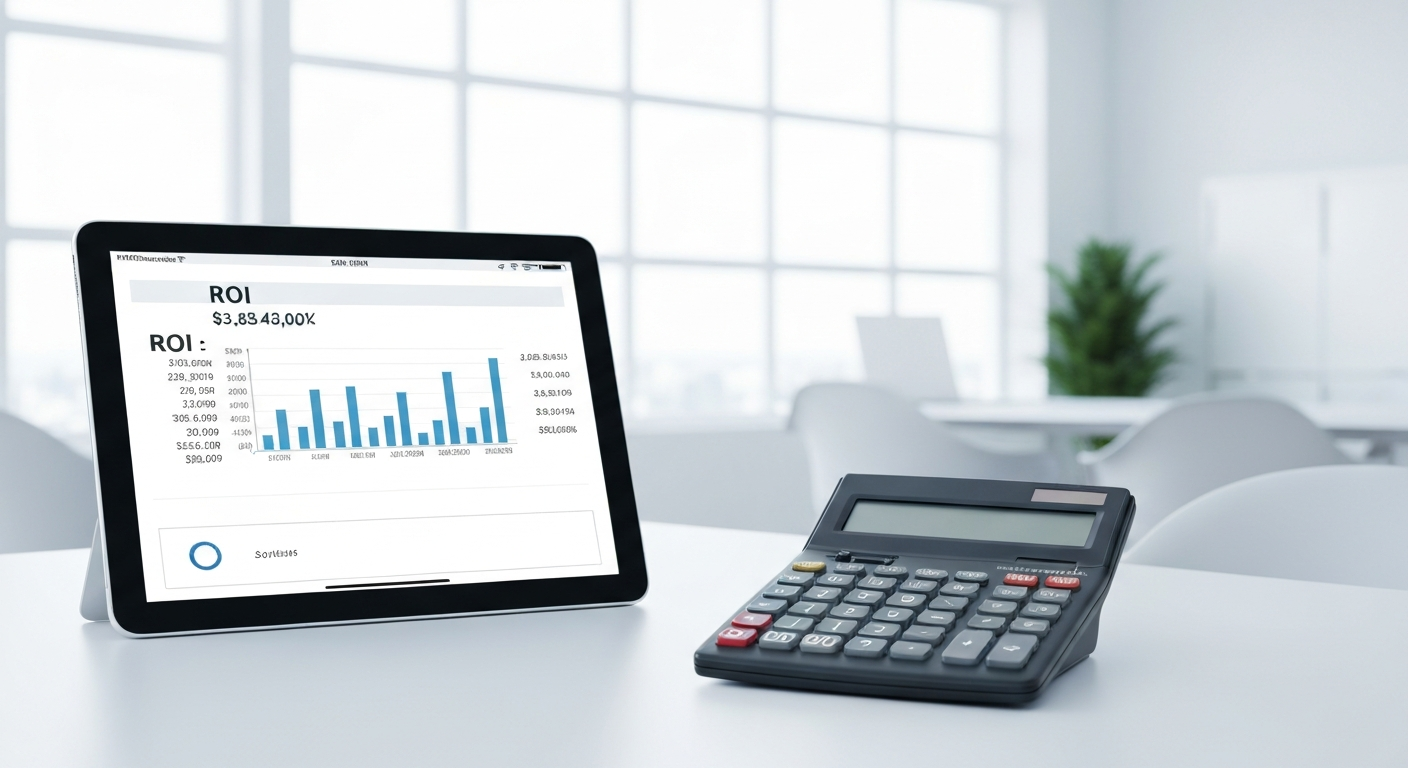
Now for the critical calculation that determines investment viability. Standard return on investment formulas need modification to account for the unique characteristics of coin-operated entertainment equipment.
ROI = (Net Annual Profit ÷ Total Initial Investment) × 100
Net Annual Profit = Gross Revenue - Operating Expenses - Depreciation - Taxes
The target benchmark for shopping mall kiddie rides falls between 25-40% annual returns, significantly higher than traditional retail investments due to operational complexity and equipment depreciation.
ROI Formula Applications and Examples
Let's examine a realistic scenario: a $6,000 carousel installed in a mid-tier shopping center.
| Component | Annual Amount | Calculation Notes |
|---|---|---|
| Gross Revenue | $18,000 | $50 daily average |
| Mall Rent (15%) | $2,700 | Revenue sharing model |
| Maintenance | $1,800 | 10% of revenue |
| Insurance & Fees | $1,200 | Various mall charges |
| Net Profit | $12,300 | 68% profit margin |
With total initial investment of $8,000 (including installation), this generates 154% annual returns—exceptional by any investment standard. However, this assumes consistent performance and doesn't account for equipment replacement cycles.
Break-Even Analysis Mathematical Models
Break-even analysis reveals how quickly investments recover initial costs and begin generating profit. The formula accounts for both fixed and variable expenses:
Break-Even Point (months) = Total Investment ÷ Average Monthly Net Profit
Using our carousel example: $8,000 ÷ $1,025 monthly net profit = 7.8 months to break even. Most successful kiddie ride installations achieve break-even within 6-12 months, making them attractive short-term investment vehicles.
The sweet spot lies in understanding which variables most dramatically impact break-even timing. Sensitivity analysis shows that location foot traffic affects break-even more than equipment cost variations.
Risk Assessment and Investment Decision Framework
Mathematical analysis extends beyond simple profit calculations to encompass risk evaluation and scenario planning. Smart operators model multiple outcomes rather than banking on single-point projections.
Investment risk in kiddie rides clusters around three primary factors: location performance variability, equipment reliability, and market saturation effects.
Statistical Risk Modeling Techniques
Apply Monte Carlo simulation principles to model revenue uncertainty. Create three scenarios—conservative, expected, and optimistic—then weight them based on location-specific factors.
Conservative estimates typically assume 70% of projected foot traffic, 15% higher maintenance costs, and 6-month delayed ramp-up. Optimistic projections might model 130% traffic, reduced maintenance, and immediate peak performance.
The weighted average provides more reliable planning data than single-point estimates. Most experienced operators weight scenarios as: 30% conservative, 50% expected, 20% optimistic.
Investment Optimization Calculations
Portfolio optimization principles apply to multiple kiddie ride investments within a single mall or across multiple locations. Diversification reduces overall risk while maximizing combined returns.
Portfolio Efficiency = Combined Annual Returns ÷ Combined Investment Risk
Mixed ride types—mechanical, electronic, interactive—show lower correlation in performance variations, creating natural hedging effects. A portfolio approach often generates 15-25% higher risk-adjusted returns than individual ride investments.
The math consistently supports kiddie ride investments when operators apply rigorous analytical frameworks. Success requires treating these installations as serious business investments rather than impulse decisions. With proper calculation methods, shopping mall entertainment becomes a predictable, profitable revenue stream that complements traditional retail operations.